
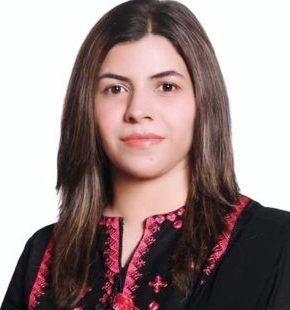
Hira Khan

Lecturer
  • Department of Management Science
  • hira.khan@nu.edu.pk
  • (061) 111 128 128

Introduction

Ms. Hira Khan is a PhD Scholar in Applied Psychology and a dedicated academician with an experience in teaching, research, and clinical practice. She holds an M.Phil and M.Sc in Applied Psychology, through which she developed a strong foundation in psychological assessment, research methodologies, and evidence-based practice. Her academic journey reflects a consistent commitment to understanding human behavior, mental health, and the socio-cultural dimensions of psychological well-being.

Her research profile is marked by significant contributions in the areas of mental health, emotional intelligence, psycholinguistics, and digital communication. She has published multiple research articles in recognized journals, exploring themes such as workplace stress, code-switching, identity negotiation, and the psychological impact of social media. She has also actively participated in and organized academic conferences, seminars, and workshops, reflecting her commitment to advancing psychological knowledge and practice.

Ms. Khan is a life member of the Pakistan Psychological Association, demonstrating her professional engagement and dedication to the field. Her research interests broadly encompass clinical psychology, applied psychology, psycholinguistics, and the intersection of psychology with emerging digital environments. She is particularly interested in exploring culturally grounded psychological phenomena and contributing to impactful, interdisciplinary research. With strong organizational, communication, and interpersonal skills, she continues to pursue academic excellence while striving to make meaningful contributions to research, teaching, and community mental health.

Education

M.Phil (Applied Psychology), The Islamia University Bahawalpur, 2012

M.Sc (Applied Psychology), Bahauddin Zakariya University Multan, 2009

Publications

1. S. M. A. Kazmi, H. Mehmood & H. Khan. “The Influence of Generative AI Adoption on Managerial Problem-Solving Capabilities and Organizational Agility.” Qualitative Research Journal for Social Studies (QRJSS), Volume 3, Number 2, 2026, pp. 369–386. DOI: 10.63878/qrjs1126.

2. R. ul Awal, H. Khan, N. Parveen & S. M. A. Kazmi. “Algorithmic Diplomacy: The Role of Artificial Intelligence in Shaping 21st Century Foreign Policy Decisions.” Al-Aasar, Volume 3, Number 2, 2026, pp. 25–44. DOI: 10.63878/aaj1599.

3. M. Najam-ud-din, S. H. Zainab, A. Shereen & H. Khan. “Workplace Stress and Psychological Distress in Healthcare Professionals: The Mediating Role of Coping Styles and the Moderating Influence of Gender.” Qualitative Research Journal for Social Studies, Volume 3, Number 1, 2026. DOI: 10.63878/qrjs833.

4. H. Khan, N. Parveen, A. Qadir & S. Rashid. “Code-Switching, Cognitive Load, and Identity Negotiation: A Psycholinguistic Study of Bilingual Youth in Urban Pakistan.” Journal of Applied Linguistics and TESOL (JALT), Volume 8, Number 3, 2025. DOI: 10.63878/jalt1278.

5. H. Khan, T. Jameel, N. Parveen & A. Sajjad. “The Sociolinguistics of ‘Online Linguistic Micro-Tribes’: How Digital Communication Shapes Niche Identity and Exclusion.” Qualitative Research Journal for Social Studies, Volume 8, Number 1, 2025. DOI: 10.63878/qrjs81.

6. B. Awan, H. Khan & N. Parveen. “Impact of Emotional Intelligence on Organizational Commitment among Employees of the Educational Sector: Moderating Role of Personality Traits and Gender.” Review of Applied Management and Social Sciences, Volume 7, Number 4, 2024, pp. 235–247. DOI: 10.47067/ramss.v7i4.375.

7. Z. Jabbar, H. Khan & A. Zummer. “The Role of TikTok in Mental Health Support: Analyzing the Efficacy and Risks of Mental Health Content.” Journal of Policy Research, Volume 10, 2024, pp. 107–116. DOI: 10.61506/02.00325.

8. H. Khan, B. Ahmad & U. Khizar. “Mental Health of Adults with Covid-19 and without Covid-19.” Pakistan Journal of Humanities and Social Sciences, Volume 9, Number 3, 2021, pp. 298–308. DOI: 10.52131/pjhss.2021.0903.0135.

9. U. Khizar, T. Naveed & H. Khan. “Emotional Intelligence, Leadership Qualities and Organizational Commitment of School Monitoring Staff.” Pakistan Social Sciences Review, Volume 5, Number 4, 2021, pp. 358–367

Collaborations at National and International Level

ACADEMIC & PROFESSIONAL ENGAGEMENTS

  1. Conference Secretary – International Conference on Educational, Clinical and Social Psychology: An Indigenous Perspective, The Women University Multan.
  2. Organizer – 2-Day Mental Health Awareness Seminar, The Women University Multan.
  3. Organized and hosted multiple academic workshops and seminars, The Women University Multan.

RESEARCH PAPER PRESENTATIONS

  1. International Conference on Educational, Clinical and Social Psychology: An Indigenous Perspective, The Women University Multan.
  2. International Conference on Social Sciences: Emerging Trends in Research, University of Southern Punjab, Multan.

Detail of Funded Projects